


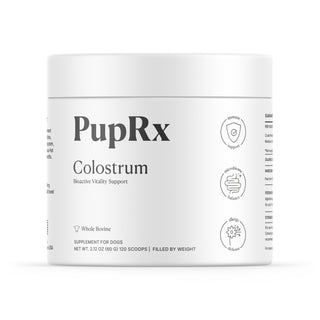
Colostrum for Dogs - Whole Bovine
Powder food topper for dogs
Supports immune health
Promotes gut & digestive balance
Helps maintain healthy skin & a shiny coat
$0.25 a scoop, or $0.22 on subscription.
One scoop per 25 lb, once a day.

30-day guarantee, nothing to send back
Every batch tested by an independent lab, reports on request
Single ingredient · Grass-fed · Made in USA
Description
Daily support from nature’s first nutrition.
PupRx Colostrum is a simple daily food topper made to support your dog’s digestion, immune health, skin and coat, and everyday vitality.
Colostrum is the first milk produced after birth, naturally rich in antibodies, proteins, and beneficial nutrients that help support the gut and immune system. Because so much of your dog’s overall health starts with these two systems, adding colostrum to their daily routine can provide broad nutritional support from the inside out.
PupRx is made with 100% whole bovine colostrum from grass-fed U.S. dairies. We keep it simple: one ingredient, no fillers, no artificial flavors, and no proprietary blends.
Everyday support you can see and feel
Healthy digestion
Supports normal digestive function and healthy, regular stools.
Skin & coat
Provides nutritional support for healthy skin and a soft, shiny coat.
Immune support
Naturally occurring antibodies help support your dog’s normal immune defenses.
Everyday vitality
Helps support dogs through every stage of life, from active adults to seniors.
Every batch is third-party tested for quality and potency, so you can feel confident about what goes into your dog’s bowl every day.
One ingredient. Whole bovine colostrum. Nothing unnecessary.
How To Use
Ingredients
The NO List
- No Fillers
- No Flavors
- No Preservatives
- No Artificial Ingredients
- No Gluten
- No Soy
- No GMO's
- No Antibiotics
- No Hormones
- No Colors or Sweeteners
- No Mystery Blends
- Nothing but colostrum
Testing
An independent lab checks every batch before it ships, and we publish the report.
- Antibody (IgG) level
- Protein and fat
- Microbial safety
- Heavy metals
- Look, smell and texture
Same word on the label. Not the same jar.
What to look for on any colostrum label, and how ours measures up.
 PupRx
Reasons to give your dog colostrum.


What’s in colostrum
The three parts first milk is best known for. See everything in first milk, part by part →
Antibodies (IgG) · 125 mg a scoop
The main antibody in first milk, the one a cow passes to her calf. Helps support normal immune function. Every jar guarantees at least 25% IgG; lot 5156 measured 25.0%.
Lactoferrin
A naturally occurring iron-binding protein. First milk contains far more of it than ordinary milk does, one of the things that sets colostrum apart.
Prebiotic sugars (oligosaccharides)
Sugars your dog doesn’t digest, which feed the good bacteria already in the gut. Help support healthy digestion. Prebiotic, not probiotic: food for good bacteria, not live cultures.
What the first six weeks look like.
-
1Day 1 · Pick the mealSprinkle it over their usual meal, at the feeding you'll stick with. Morning or evening, either works.
-
2Week 1 · Make it automaticSame meal, same time, every day, so it becomes part of feeding rather than an extra job.
-
3Weeks 2–4 · The habit setsThis is the stretch where routines slip. The one rule is no skipped days.
-
4Weeks 4–6 · Stay consistentPlan on four to six weeks of daily use. Every dog is different, and results vary.
If it's not for your dog, we refund it.
Questions about colostrum
What does whole bovine colostrum actually mean?
Bovine means it comes from cows, the usual source for colostrum supplements. Whole means all of the colostrum, dried to a powder: the antibodies (IgG), the protein and the natural fat, with nothing separated out. That's the entire ingredient list.
Is it dairy?
Yes. Colostrum is the first milk a cow makes after calving, so it's a dairy product. If dairy doesn't agree with your dog, ask your vet before you add it.
Will it upset my dog's stomach?
Treat it like any new food. If stools loosen and don't settle within a few days, stop and ask your vet.
Is it for puppies, seniors, or both?
Both. The serving goes by weight, not age, so a puppy and a senior of the same weight get the same scoop. For a puppy, or a dog under a vet's care, ask your vet first.
Is it the same as a probiotic?
No. A probiotic adds live bacteria to the gut. Colostrum is a food: first milk, with its antibodies (IgG), protein and nutrients. A probiotic carries none of those. They do different jobs, so it isn't either-or. If your dog's probiotic is something your vet prescribed, ask before you add the scoop.
Does it matter what food I put it on?
No. It's a plain powder, so it goes on whatever your dog already eats: kibble, wet or raw. Sprinkle it over the top or stir it in.
Why is the serving so small?
Because nothing in it is there for bulk. A scoop is half a gram, and all of it is colostrum. Bigger dogs get more scoops, not bigger ones, so measure by your dog's weight, not by eye.
Start the daily scoop